






























|
|
 |
 |







Free Courses «Vitebsk: Real and Popular History of the Native Town». «Vitebsk – a town on the trade route from the Varangians to the Greeks»
- Details
- Created on Tuesday, 11 October 2016 07:39
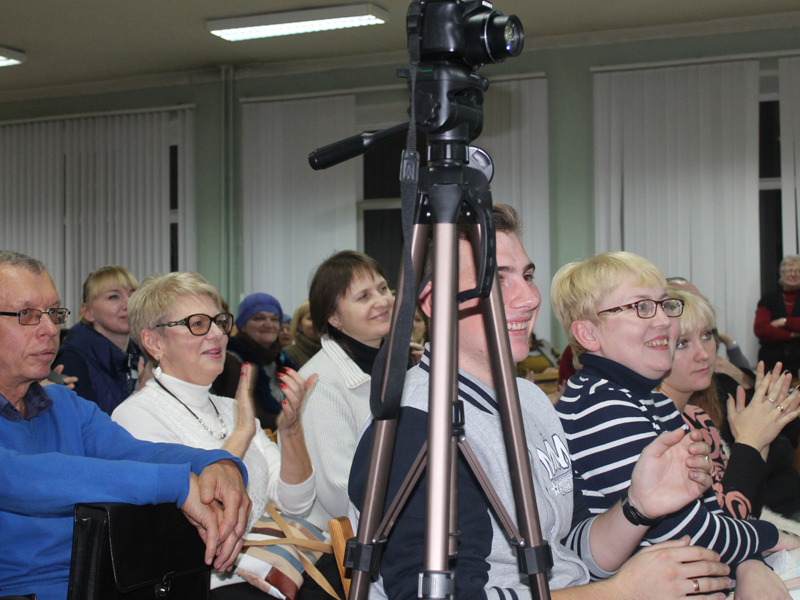
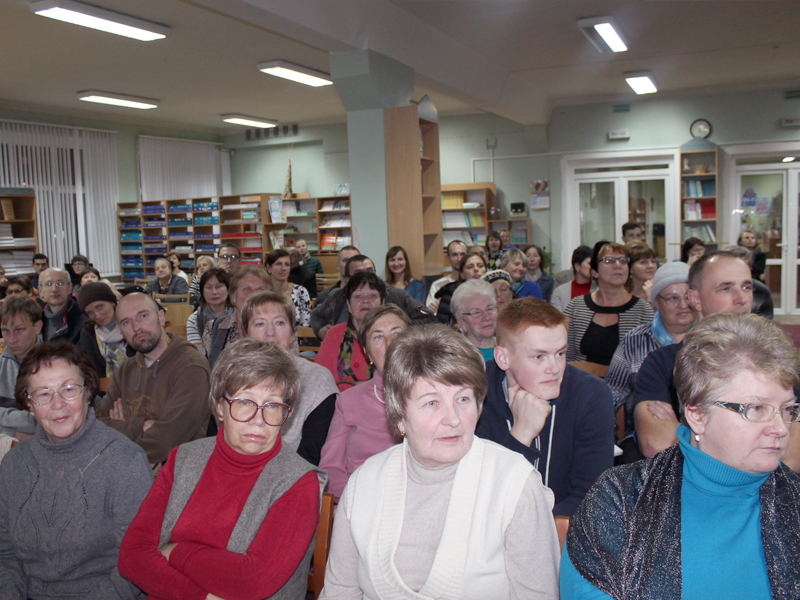
On October 13 the library hosted yet another lecture of the free courses «Vitebsk: Real and Popular History of the Native Town». The topic discussed that day was «Vitebsk – a town on the trade route from the Varangians to the Greeks».
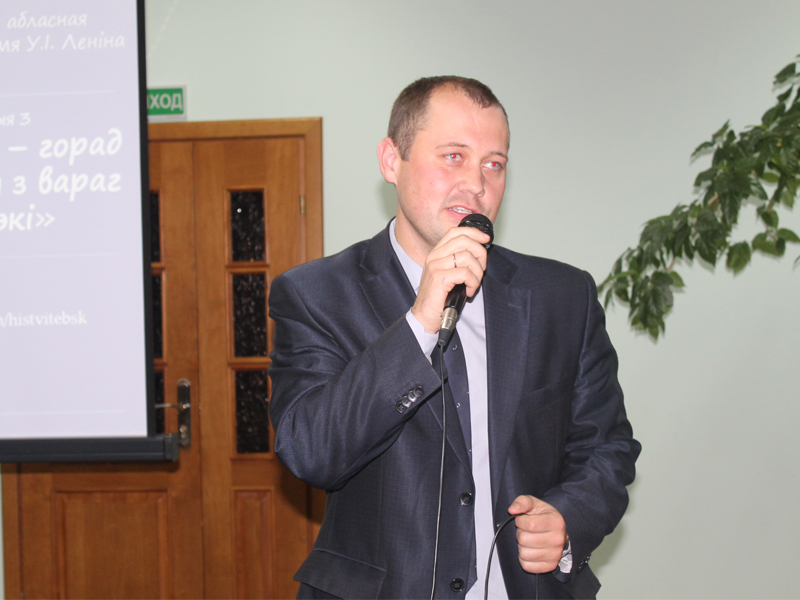
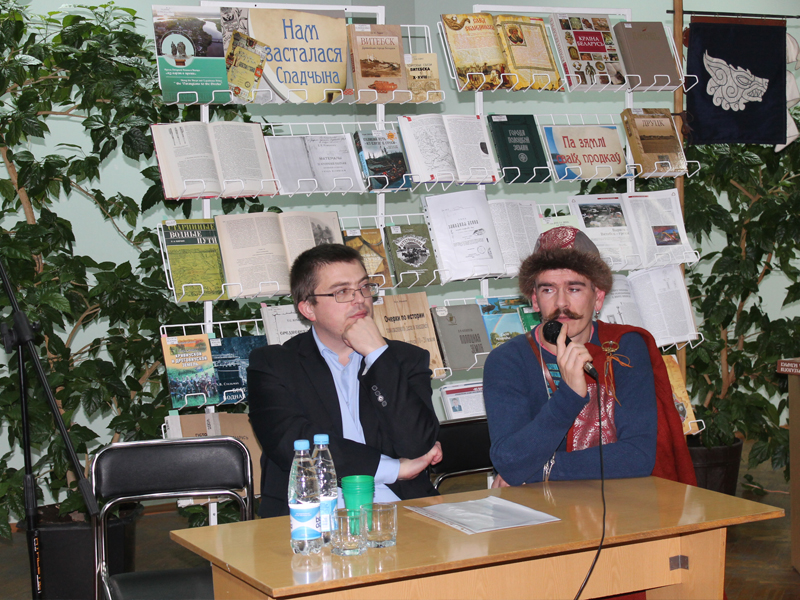
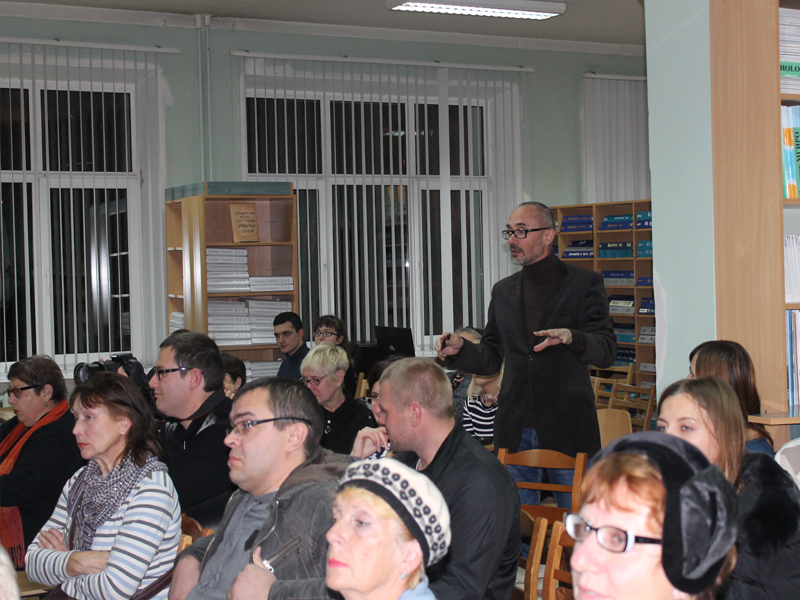
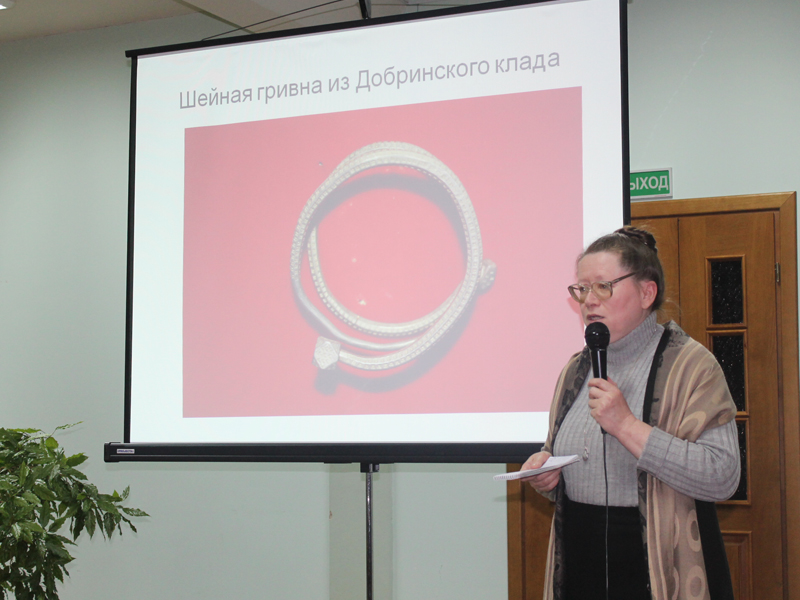
The lecture encompassed the presentations made by PhD in History Denis Yurchak, PhD in History Anatoly Dulov, Leading Researching Fellow of Vitebsk Regional Museum of Local History Natalia Sharkovskaya and members of the club of historical re-enactment «Vargentorn». Denis Yurchak told about the origins of the first major civilizations on the rivers, the positioning of Eastern Slavic tribes from chronicles on the rivers, the role of the Dvina in the trade route from the Varangians to the Greeks in the 9th – 10th centuries. Results of the archaeological excavations in Cordon village of Shumilino district were introduced, testifying that an ancient town and two settlements located there can be dated of the 8th-10th centuries. The facts about the traces left by the Northmen in the region of Vitebsk and in Vitebsk itself as well as large hoards of coins related to the Scandinavian period aroused a great interest of the audience.
The presentation of Anatoly Dulov brought to light the etymology of certain words associated with the Northmen. It also featured the role of the Northmen in the formation of the Old Russian state. For centuries the inhabitants of the Dvina region called themselves «Rus», «Ruthenians», «Rusky lyud».
The parts of harness, weapons, Scandinavian crosses and other artifacts of that period are stored in Vitebsk Regional Museum of Local History and exhibited as part of the exposition «The Ancient Vitebsk». The Nordic Antiquities of Vitebsk region became the subject of the presentation delivered by Natalia Sharkovskaya.
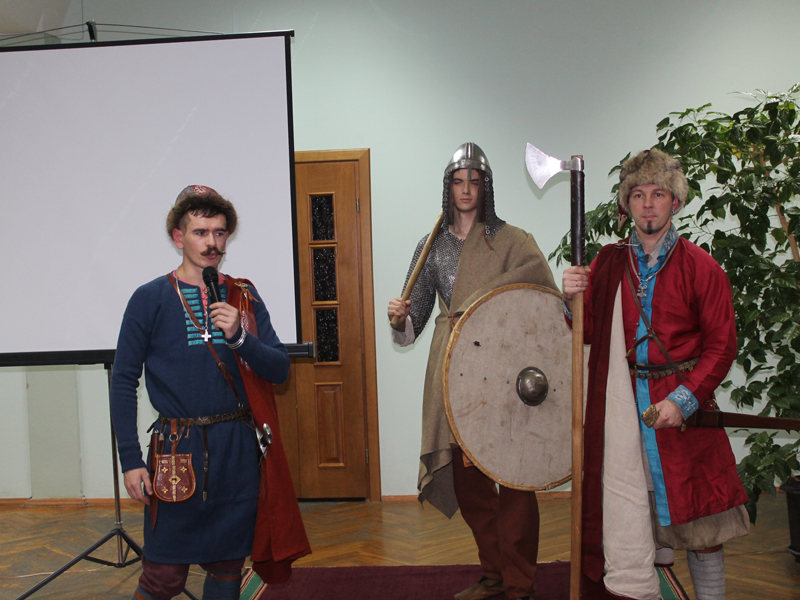
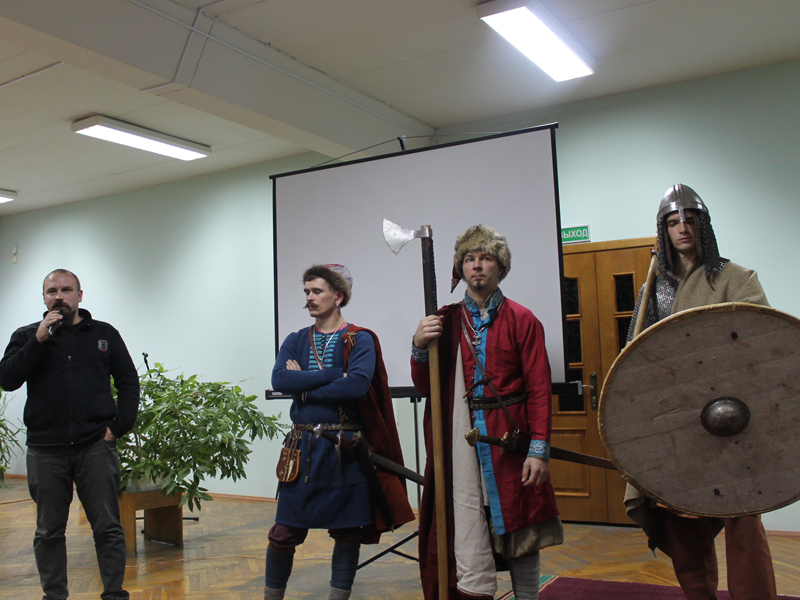
The members of the «Vargentorn» club demonstrated the clothes of Varangian mercenary warriors and gave a detailed explanation about the specifics of their military equipment. The information gathered during the excavation works of burial sites of the Scandinavian period in the village of Gnyozdovo turned out to be very helpful in the reconstruction of the clothes of Vikings. The participants of the lecture showed a particular interest in the specifics of Vikings' life and their military equipment.
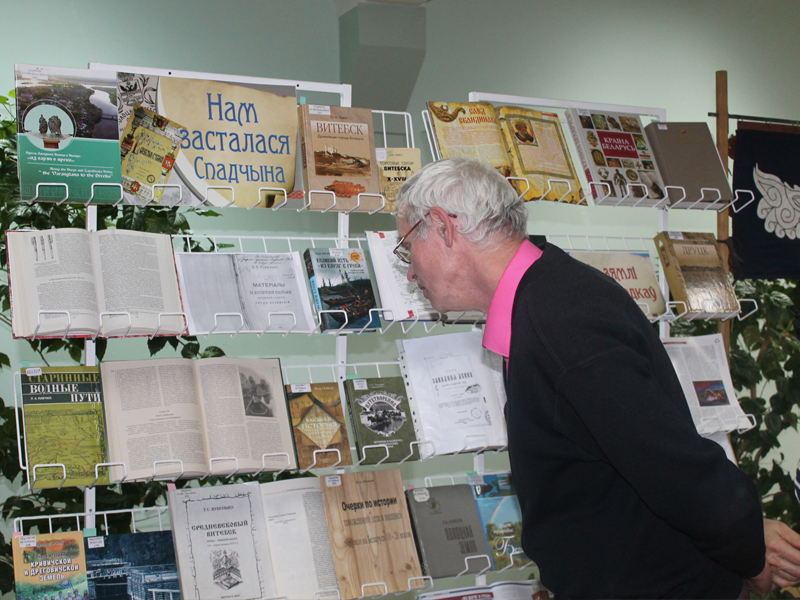
To see the books recommended for a more complex study of the lecture's topic, please visit the Department of Local History Literature and Bibliography.
The records of the lecture can be found at the project's community in VK: https://vk.com/histvitebsk.