































|
|
 |
 |








Free Courses «Vitebsk: Real and Popular History of the Native Town». «Vitebsk in the wars of XIV-XVIII centuries»
- Details
- Created on Tuesday, 21 February 2017 07:29
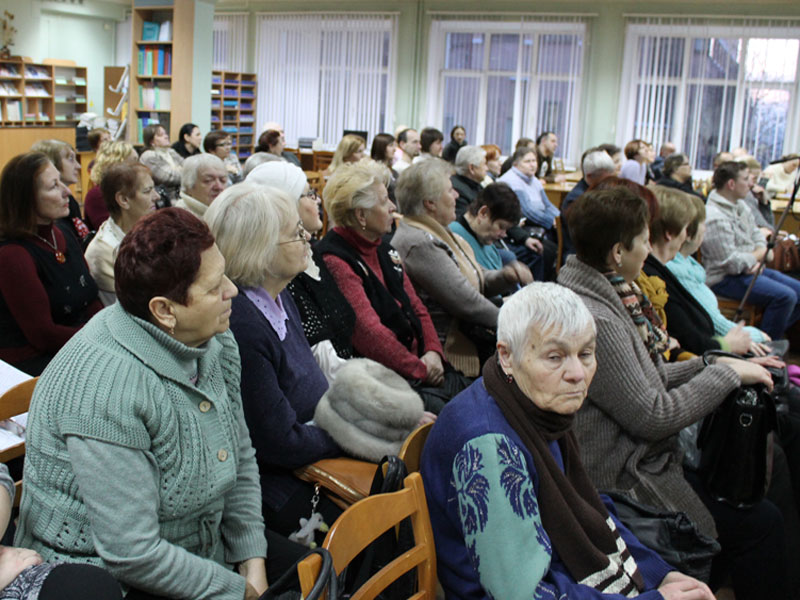
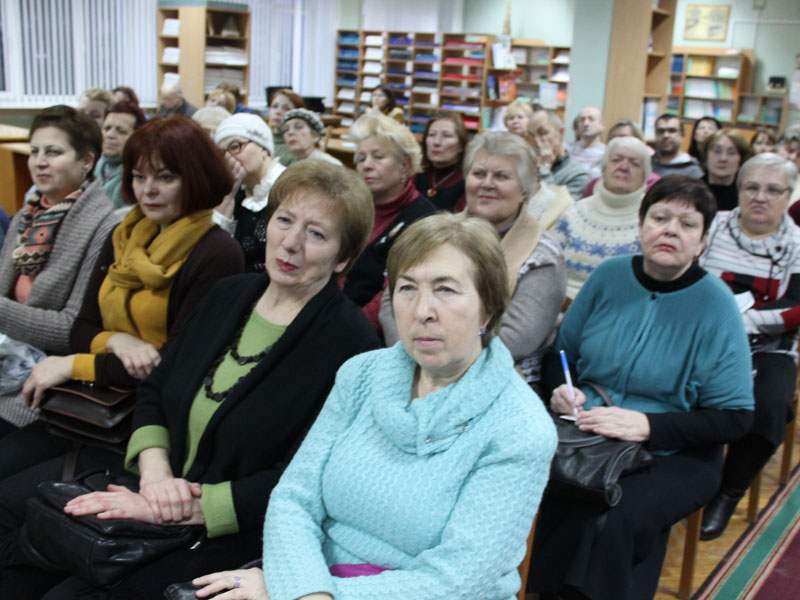
On the 9th of February the library hosted a regular session of the courses «Vitebsk: Real and Popular History of the Native Town» which held the title «Vitebsk in the wars of XIV-XVIII centuries». That historic period was marked by a sheer number of military conflicts that affected our territories. A border town, Vitebsk more than once was dragged into military confrontations and played a significant part in the national defense.
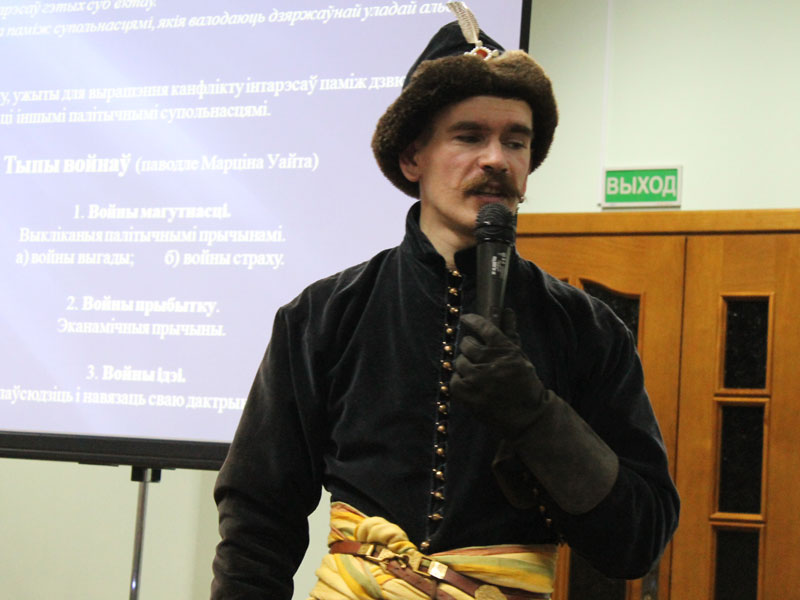
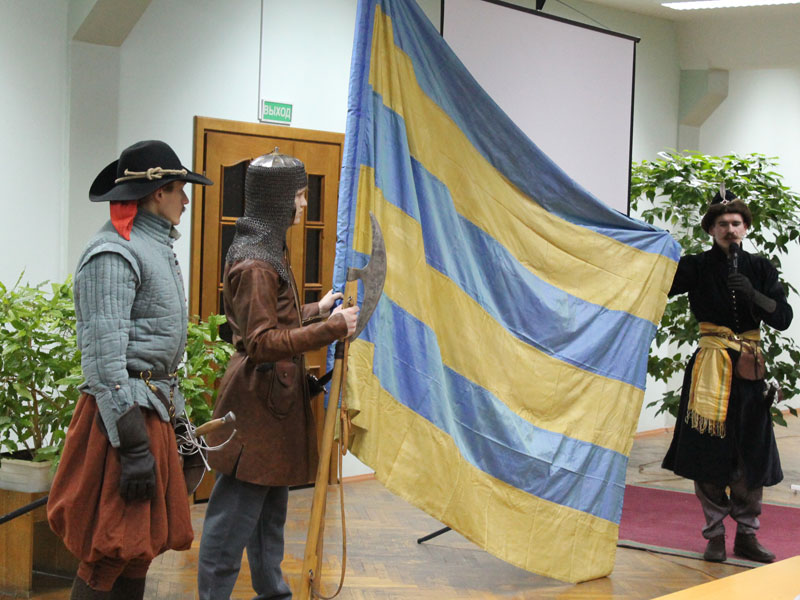
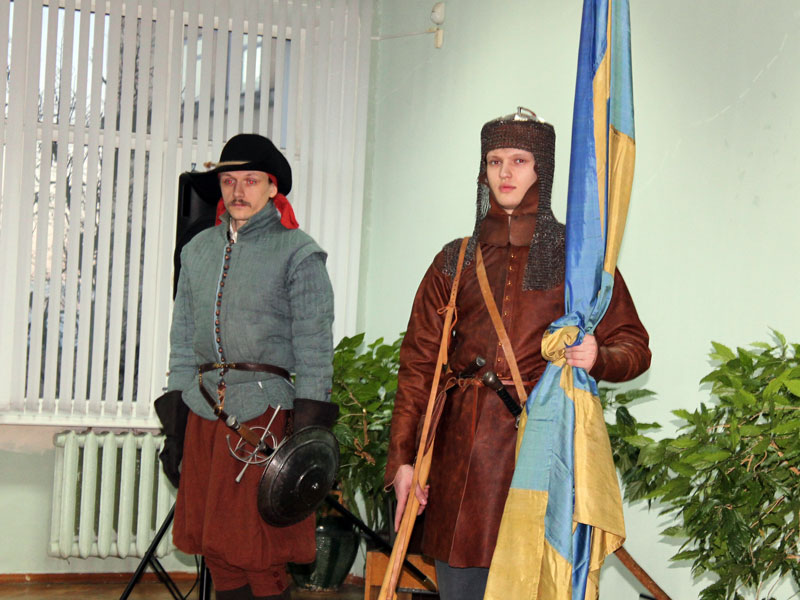
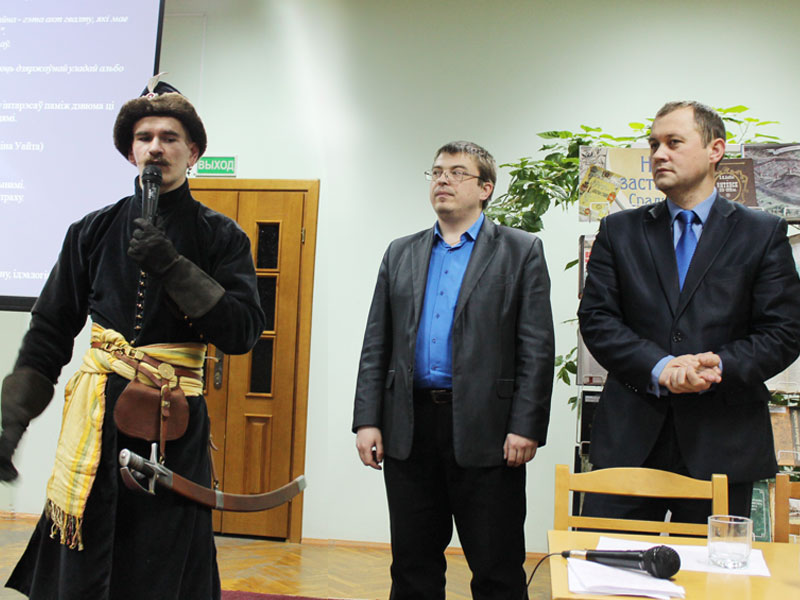
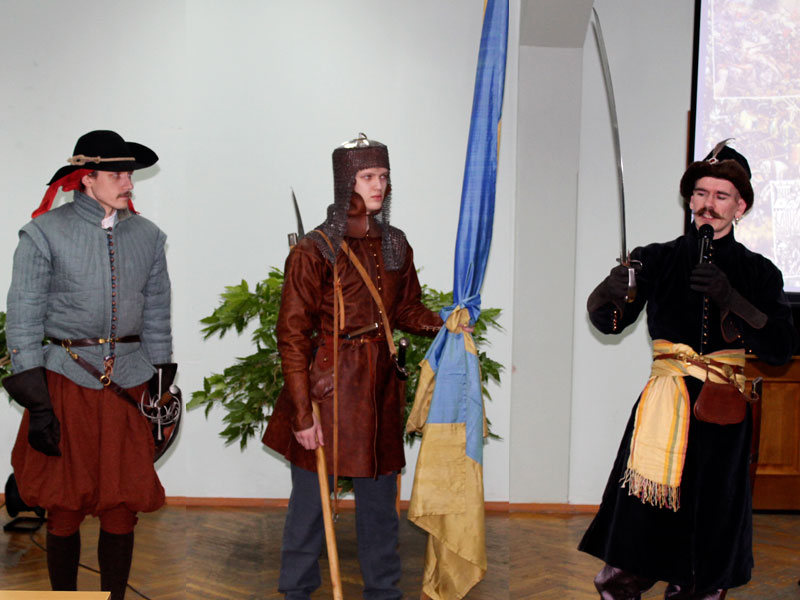
The lecture began by the presentation made by the club of historical re-enactment «Vargentorn». The club's leader Makar Babenko delved into the characteristics of clothes and military equipment of that era. The club members demonstrated various civic and battle costumes, including «civic costume of nobility», «military uniform of «armor-clad nobility», and «uniform of a European mercenary musketeer of the first half of XVI century». During the battles our troops used a large gonfanon which was both the symbol of military formation and a marker. The guests brought with them the first Belarusian scientific reconstruction of the gonfanon made from «azure and yellow taffeta» which dates back to the formation of Vitebsk militia in 1654. Apart from the above gonfanon, Vitebsk also had a gonfanon with the emblem of Vitebsk and Vitebsk province on it. However, as the leader pointed out, the reconstruction of that gonfanon is a long-term goal which requires a deep and thorough study of historical sources.
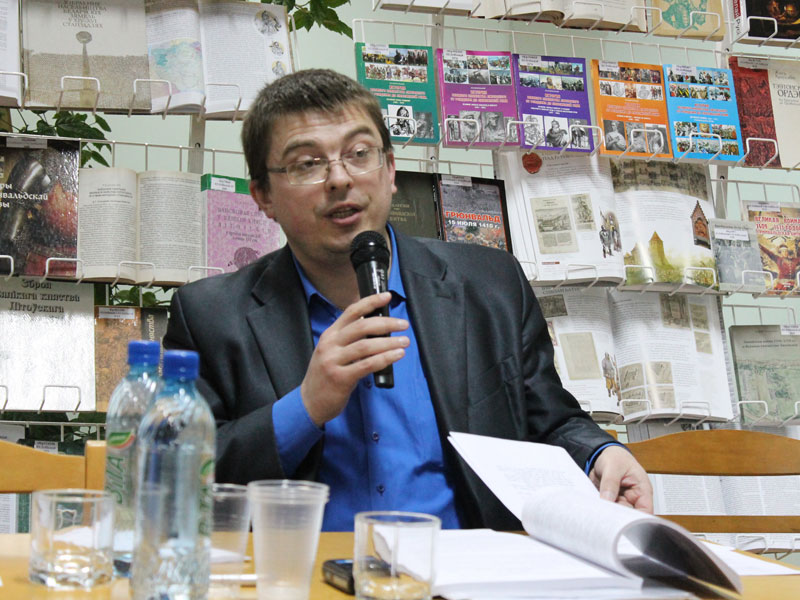
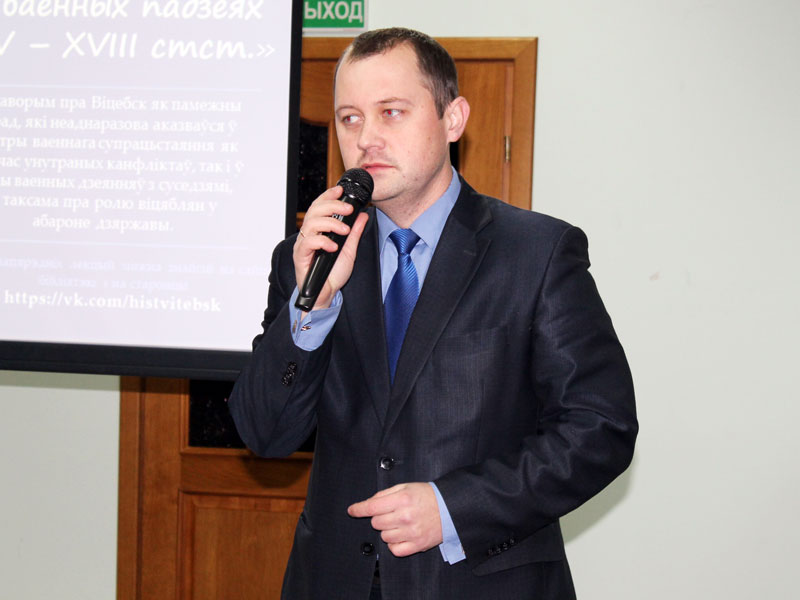
The next person to take the floor was Anatoly Dulov, Head of the Department of the History of Belarus and Candidate of Historical Science. He delineated how modern historical science treats wars and what were the attributes, types and causes of wars. He said that wars for the nobility in those days had not been something uncommon. The fights for Vitebsk were not always the result of foreign invasion; they often were the product of internal conflicts. Anatoly Dulov recalled how Svitrigaila had struggled for the throne in Vitebsk or how Cossacks had attacked it. Chief Specialist at the Main Department for Ideology, Culture and Youth Affair of Vitebsk Executive Committee Denis Yurchak noted that one should not look at the military conflicts of XI-XVIII centuries through the lens of the bloodiest conflicts in the world's history – World War I and World War II. He said that at the time soldiers had fought for their lord and not for the idea or their people, and mercenaries had fought for money. During the majority of such conflicts Vitebsk had managed to make a stand, though its suburbs had been destroyed. The town had been heavily damaged in the war between Russia and Polish-Lithuanian Commonwealth in 1654-1667 and in the Second Northern War in 1700-1721. In 1708 Russian Tsar Peter I had ordered to burn Vitebsk. Yet, scores of historical references survive to this day, due to the fact that some military events as well as documents were recorded. Take for example the famous «Landscape Drawing of Vitebsk of 1664» which helped us to get a comprehensive picture of castles of Vitebsk of that era. This drawing had been secretly drawn with military purpose in mind.
Books recommended for those willing to make a more complex study on the subject of the lecture can be found at the Department of Local History Literature and Bibliography. The records of the lecture can be found at the project's community on VK and on the website of the Vitebsk Regional Library.