































|
|
 |
 |









Free Courses «Vitebsk: Real and Popular History of the Native Town». «Vitebsk as an Industrial Center of the Russian Empire»
- Details
- Created on Monday, 10 April 2017 12:29
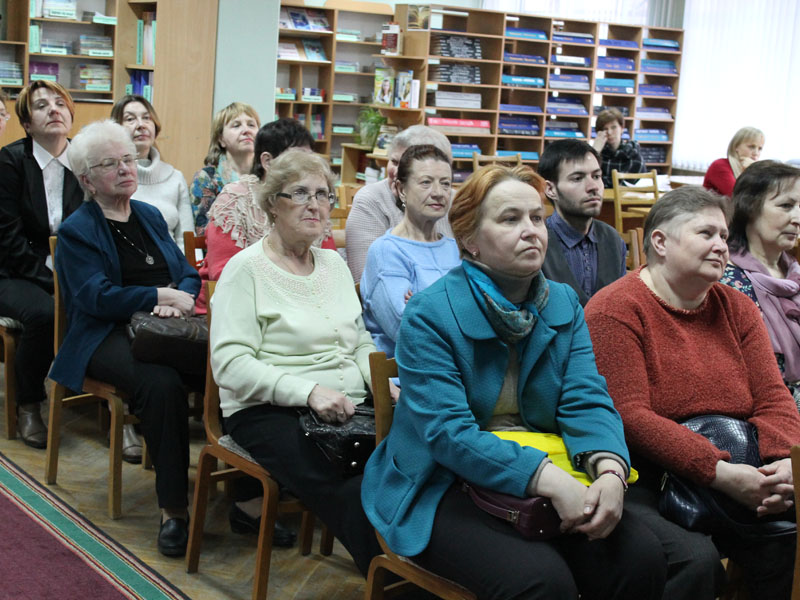
On April 13, 2017 the library held a regular session of the free courses «Vitebsk: Real and Popular History of the Native Town». The topic of the lecture was «Vitebsk as an Industrial Center of the Russian Empire».
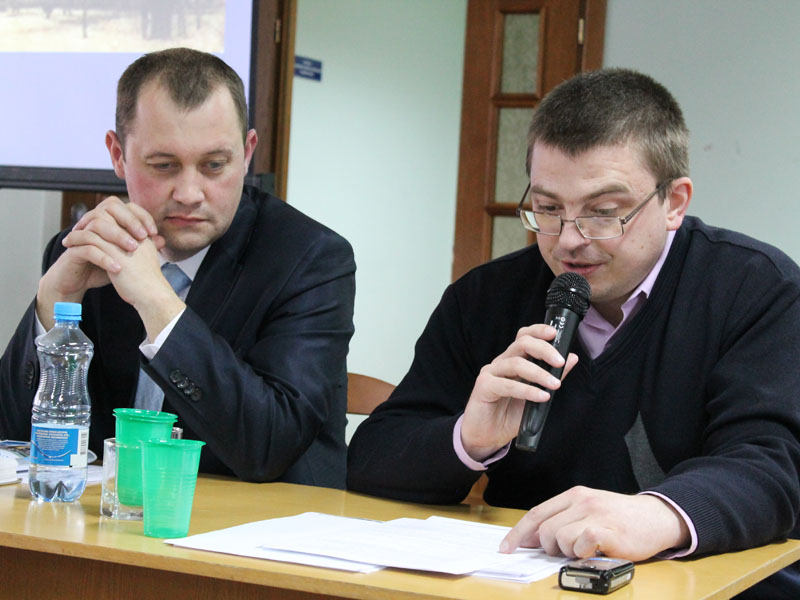
In the latter half of the nineteenth century Vitebsk along with other Belarusian towns was involved in the process of industrial development. Chief Specialist of the General Department for Ideology, Culture and Youth Affairs at the Vitebsk Executive Committee Denis Yurchak introduced the factors that had contributed to that development and listed the important stages of the development of capitalism in Belarus. He presented interesting fact about businesses that were operating in Vitebsk in the late nineteenth century – the beginning of the twentieth century. For instance, the visitors learned that a flax-spinning facility «Dvina» had operated in Vitebsk in 1900-1946, and was one of the biggest factories in Belarus at that moment. In 1906 there were 65 businesses in Vitebsk with an eyeglass factory and tobacco company at the head of that list. Development of transportation network became a significant incentive contributing to the economy growth. Head of the Department of History of Belarus at VSU named after P. Masherov, PhD in History Anatoly Dulov spoke about the railway construction and its effects to the industrial development of Vitebsk.
There were also interesting facts about the everyday life of Vitebsk residents, average wages of workers and food prices, local means of transport and the first run of Vitebsk tramway.
The development of industry, transport and trade led to the growth of towns. Vitebsk morphed into a major industrial and trade center, and became the second most important Belarusian town.
Those willing to study in depth the subject of the lecture may want to visit the Department of Local History Literature and Bibliography to find relevant literature. The records of the lecture can be found at the project's community on VK and on the website of the Vitebsk Regional Library.